STUDY PROGRAMME PLAN
|
Course units |
ECTS credits |
|
1st YEAR |
60 |
|
1 SEMESTER |
30 |
|
Compulsory course units |
30 |
|
Global Trends and Dimensions in Higher Education |
6 |
|
Internationalisation of HE: Meanings, Rationales, Strategies and Trends |
6 |
|
Innovation, Change and Partnerships in Higher Education Research |
6 |
|
External Actors in Internationalisation of Higher Education |
6 |
|
Technology, Digitalisation and AI in Higher Education |
6 |
|
2 SEMESTER |
30 |
|
Compulsory course units |
30 |
|
Regional Development in Higher Education: European and Comparative Perspective |
6 |
|
Global Mobility of Students, Staff and Programmes |
4 |
|
Internationalisation of the Curriculum at Home |
4 |
|
Internationalisation for Sustainable Development and Society |
4 |
|
Applied Research Thesis for Sustainable Institutional Change |
12 |
|
Programme and Course Leader: Hans de Wit Professor Emeritus and former Director, Center for International Higher Education (CIHE), Boston College; Senior Fellow, IAU; founding editor, Journal of Studies in International Education; founding member and past President, EAIE. |
Course: GLOBAL TRENDS AND DIMENSIONS IN HIGHER EDUCATION Course: GLOBAL MOBILITY OF STUDENTS, STAFF AND PROGRAMMES |
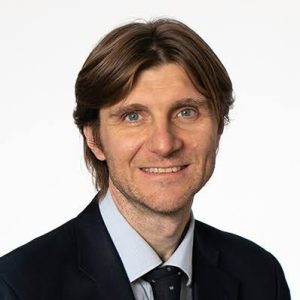
IAU Coordinator: Giorgio Marinoni |
|
|
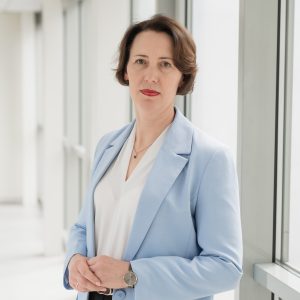
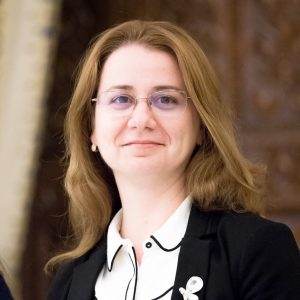
Programme Co-Leader: Jolanta Urbanovič Professor at Mykolas Romeris University; former Vice-Dean; former Vice-Minister of Education, Science and Sport and former Adviser to the President of Lithuania on education, science and higher education policy. |
|
|
Course Leader: Elspeth Jones Emerita Professor of Internationalization of Higher Education, Leeds Beckett University; founding editor of Routledge’s Internationalization in Higher Education series. |
Course: INTERNATIONALISATION OF HIGHER EDUCATION: MEANINGS, RATIONALES, STRATEGIES AND TRENDS |
|
Course Leader: Tessa DeLaquil Associate Professor, Norwegian University of Science and Technology; co-editor of Springer’s Debating Higher Education: Philosophical Perspectives; Associate Editor, Policy Reviews in Higher Education. |
Course: INNOVATION, CHANGE AND PARTNERSHIPS IN HIGHER EDUCATION RESEARCH |
|
Course Leader: Laura Rumbley Director for Knowledge Development and Research, EAIE; former Associate Director, Center for International Higher Education (CIHE), Boston College; former Deputy Director, Academic Cooperation Association (ACA). |
Course: EXTERNAL ACTORS IN INTERNATIONALISATION OF HIGHER EDUCATION |
|
Course Leader: Marius Laurinaitis Professor, Mykolas Romeris University; Director of the Bachelor’s programme in Law, Financial Innovation and Artificial Intelligence; consultant to the United Nations Office on Drugs and Crime (UNODC). |
Course: TECHNOLOGY, DIGITALISATION AND AI IN HIGHER EDUCATION |
|
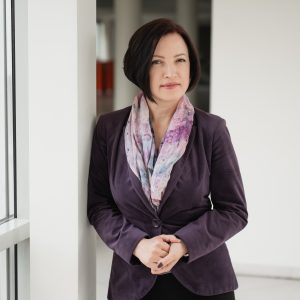
Course Leader: Ligia Deca Secretary-General, Romania’s National Commission to UNESCO; Vice-Rector, National University of Political Studies and Public Administration; former Minister of Education and former Head of the Bologna Secretariat. |
Course: REGIONAL DEVELOPMENT IN HIGHER EDUCATION: EUROPEAN AND COMPARATIVE PERSPECTIVE |
|
Course Leader: Luciane Stallivieri Professor and researcher, Federal University of Santa Catarina; coordinator of research on internationalization of education; consultant to the Brazilian Ministry of Education, OEA (Organization of American States) and UNESCO. |
Course: INTERNATIONALISATION OF THE CURRICULUM AT HOME: INCLUSIVE PEDAGOGY AND DIGITAL INNOVATION |
|
Course Leader: Rita Locatelli Researcher, Università Cattolica del Sacro Cuore; Academic Board member, Centre for Higher Education Internationalization (CHEI); Scientific Committee member of the UNESCO Chair in Education for Human Development and Solidarity among Peoples. |
Course: INTERNATIONALISATION FOR SUSTAINABLE DEVELOPMENT AND SOCIETY |
|
Course Leader: Inga Juknytė-Petreikienė Associate Professor, Head of the Centre of Academic Affairs, Mykolas Romeris University; extensive experience (more than 25 years) in international higher education projects, joint degree programmes, programme evaluation and quality assurance across Europe and beyond. |
Course: FINAL PROJECT |





Will be updated.
- Choose a study programme
- Fill in the application form at apply.mruni.eu
- Pay the non-refundable application fee (for non-EU citizens – 100 euros, for EU-citizens, MRU alumni, and Ukrainians – 50 euros)
- Receive your application evaluation results
- Confirm your acceptance by paying the first-year tuition fee and 50 euros registration fee (non-refundable)
- Sign the study contract
- Start Temporary Residence Permit application procedure
- Register to studies
Required documents:
- Bachelor degree or equivalent first university degree diploma with a minimum study duration of 3 years is required (for graduates from Indian or Bangladeshi education systems, a degree with a minimum study duration of 4 years is required.)
- Academic transcripts of each study year
- Document proving English language level
- Proof of at least 3-years work experience in a higher-education position
- Letter of recommendation
- Passport copy
- Curriculum Vitae (CV)
- Certificate of Employment
Provided documents must be in color, have no cut corners (high quality scan).
Required level – B2
Assessments of English language proficiency certificates equivalent to level B2:
- DUOLINGO 100-125 (recommended)
- TOEFL IBT 72-94 (4-4,5)
- IELTS 5.5-6.5
- PTE score 59-75
- IGCSE English First Language – E/3 or above
- Cambridge International English GCE O Level/GCSE – English Language grade E / 3 or above
- Cambridge English: B2 First, C1 Advanced – Overall Cambridge English Scale score of 162 or above
If you do not have a certificate proving your English language proficiency level, you can take the University Online English language level test. You will be able to choose this option while filling in the application. The test is free of charge.
Certificate is not required if your native language is English or if your previous studies were conducted fully in English language.
- If the original educational documents/transcripts are in English, Lithuanian or Russian with an apostille (if required) on the scanned original, no translation needed.
- If original educational documents/transcripts are not in English, Lithuanian or Russian languages, then they have to be supplemented with an official translation.
- The official translation has to be confirmed with the sworn translator’s signature or official notarization.
- Accepted students shall present their original educational documents/transcripts to the International Office upon arrival to begin their studies.
Country Specific Requirements can be found here.
Recognition of Foreign Qualifications
- The evaluation and recognition of prior qualifications is a part of Mykolas Romeris University (MRU) admissions process.
- By submitting the online application you confirm that the documents are legitimate and that MRU can verify the authenticity of the documents by contacting its issuing authority and national ENIC/NARIC centre.
- Documents uploaded must be in good condition and in full colour. Documents issued in languages other than English, Russian, or Lithuanian must be accompanied with an official translation into English or Lithuanian.
- Before you apply make sure that you have a complete documentation package and that your qualifications are giving access to higher education according to the study programme level you are applying for at the MRU.
Recognition Criteria
- The purpose of an assessment is to compare a foreign qualification with a similar level qualification awarded in Lithuania according to quality, profile, content, workloads and learning outcomes.
- Your qualification will be assessed according to specific requirements for the programme you are applying for and whether your academic results are sufficient for studies at the MRU.
Right to Appeal
Recognition decisions can be appealed against to the Academic Recognition of Foreign Qualifications Concerning Higher Education Appeal Committee under the Lithuanian Ministry of Education and Science.
All appeals with supporting documents must be submitted to:
Centre for Quality Assessment in Higher Education
Ph.: +37052104778
Email: recognition@skvc.lt
Address: SKVC, A. Goštauto st. 12, LT-01108, Vilnius, Lithuania
The procedure of evaluation and recognition of academic qualifications
Master Degree:
Application fee (non-refundable):
- for Non-EU citizens – €100
- for EU citizens, MRU Alumni, and Ukrainians – €50
Registration fee (non-refundable):
- €50
Tuition fee (EU/Non-EU citizens) per 1 academic year: €5500 per one academic year (2026-2027).
Payment information will be provided in the invoices issued in your online application form.
Student continues to pay the same tuition fee which was implied at the time of the admission.
IAU Certificate:
Application fee (non-refundable):
- for Non-EU citizens – €100
- for EU citizens, MRU Alumni, and Ukrainians – €50
Registration fee (non-refundable):
- €50
Tuition fee:
- €3200 for IAU Members
- €3500 for Non IAU Members
Payment information will be provided in the invoices issued in your online application form.
Individual Course:
Tuition fee:
- €700 for 4 ECTS courses
- €800 for 6 ECTS courses
List of scholarships can be found here.
The IAU Certificate programme consists of five courses from the full Master’s programme and is delivered entirely online. It runs over one academic year, following the same schedule as the full Master’s programme, with certificate participants attending classes alongside Master’s students. Participants enrol as non-degree learners, without student status.
The five courses of the IAU Certificate are:
- Global Trends and Dimensions in Higher Education (6 ECTS): Professor Hans de Wit
- Internationalization of HE: Meanings, Rationales, Strategies and Trends (6 ECTS): Professor Elspeth Jones
- Global Mobility of Students, Staff and Programmes (4 ECTS): Professor Hans de Wit
- Internationalisation of the Curriculum at Home: Inclusive Pedagogy and Digital Innovation (4 ECTS) Professor Luciane Stallivieri
- Internationalisation for Sustainable Development and Society (4 ECTS) Professor Rita Locatelli
Fees for the certificate:
- Participant from an IAU member institution: 3200 Euros
- Participant from a non-member institution: 3500 Euros
Admission requirements and application form for IAU certificate will be available soon.
In addition to enrolling in the full MPA programme, professionals can choose to take individual courses for focused professional development.
Participants can select from 9 courses that form part of the MPA programme, each worth 4–6 ECTS credits and delivered fully online.
This flexible option allows professionals to develop specific skills and knowledge without committing to the full master’s programme. Participants enrol as non-degree learners, without formal student status, and earn ECTS credits that may be transferred towards the full MPA degree at a later stage.
Tuition fees per course:
- 4 ECTS course – €700 per participant
- 6 ECTS course – €800 per participant
Registration for individual courses is open from 15 October to 17 December 2026, following the same admission period as the full MPA programme.
Studies begin in February 2027. Participants enrolled in individual courses will study alongside students in the full MPA programme, following the official programme timetable.
E-mail: study@mruni.eu
Phone: +370 5 271 4700
WhatsApp: +370 6 564 6682
Office: I-122

Professor Emeritus and former Director, Center for International Higher Education (CIHE), Boston College; Senior Fellow, IAU; founding editor, Journal of Studies in International Education; founding member and past President, EAIE.
COURSE: GLOBAL TRENDS AND DIMENSIONS IN HIGHER EDUCATION
„Higher education is shaped by global trends and developments that influence institutions, students, and societies around the world. This course provides students with the opportunity to explore these trends, understand their impact on higher education and its internationalisation, and critically examine the changing global landscape in which universities operate.“

Emerita Professor of Internationalization of Higher Education, Leeds Beckett University; founding editor of Routledge’s Internationalization in Higher Education series
COURSE: INTERNATIONALISATION OF HIGHER EDUCATION: MEANINGS, RATIONALES, STRATEGIES AND TRENDS
„This flexible programme allows professionals to develop their strategic and practical approaches to the internationalisation of higher education at Masters level, working with globally-minded participants and facilitated by world renowned experts.“

Associate Professor, Norwegian University of Science and Technology; co-editor of Springer’s Debating Higher Education: Philosophical Perspectives; Associate Editor, Policy Reviews in Higher Education
COURSE: INNOVATION, CHANGE AND PARTNERSHIPS IN HIGHER EDUCATION RESEARCH
„The MRU-IAU MPA programme provides an essential toolkit for higher education leaders and professionals, developing competency in the fundamental disciplinary knowledge-base of international higher education alongside the capacity for practical and timely engagement with urgent issue areas in European and global higher education.“

Director for Knowledge Development and Research, EAIE; former Associate Director, Center for International Higher Education (CIHE), Boston College; former Deputy Director, Academic Cooperation Association (ACA)
COURSE: EXTERNAL ACTORS IN INTERNATIONALISATION OF HIGHER EDUCATION
„The knowledge base required for successful career development in the field of international education has grown significantly in recent years. This programme offers cutting-edge information and insights to boost both your skill set and your confidence as an international higher education professional in a fast-moving world.“

Professor, Mykolas Romeris University; Director of the Bachelor’s programme in Law, Financial Innovation and Artificial Intelligence; consultant to the United Nations Office on Drugs and Crime (UNODC)
COURSE: TECHNOLOGY, DIGITALISATION AND AI IN HIGHER EDUCATION
„Artificial intelligence and digital technologies are transforming the way we learn, teach, and work. This course gives students the opportunity to explore these changes, develop a critical understanding of AI, and learn how to use emerging technologies creatively, effectively, and responsibly.“

Secretary-General, Romania’s National Commission to UNESCO; Vice-Rector, National University of Political Studies and Public Administration; former Minister of Education and former Head of the Bologna Secretariat
COURSE: REGIONAL DEVELOPMENT IN HIGHER EDUCATION: EUROPEAN AND COMPARATIVE PERSPECTIVE
„I recommend this programme because I see how it empowers higher education leaders to transform crises into opportunities through strategic internationalisation and applied institutional change.“
Professor Emeritus and former Director, Center for International Higher Education (CIHE), Boston College; Senior Fellow, IAU; founding editor, Journal of Studies in International Education; founding member and past President, EAIE
COURSE: GLOBAL MOBILITY OF STUDENTS, STAFF AND PROGRAMMES
„Student and staff mobility is an important part of the international higher education experience, connecting people, institutions, and cultures across borders. This course examines different types of mobility of students, staff and programs, current approaches to global mobility and Transnational Education, and the opportunities and challenges involved in developing mobility for students, staff, and academic programmes.“

Professor and researcher, Federal University of Santa Catarina; coordinator of research on internationalization of education; consultant to the Brazilian Ministry of Education, OEA (Organization of American States) and UNESCO
COURSE: INTERNATIONALISATION OF THE CURRICULUM AT HOME: INCLUSIVE PEDAGOGY AND DIGITAL INNOVATION
„I recommend the Global Engagement and Internationalisation MPA because it pairs IAU-backed global expertise with a flexible blended format and practice-driven applied research to equip higher-education leaders with the strategic, digital, and sustainable tools to deliver real institutional impact.“

Researcher, Università Cattolica del Sacro Cuore; Academic Board member, Centre for Higher Education Internationalization (CHEI); Scientific Committee member of the UNESCO Chair in Education for Human Development and Solidarity among Peoples
COURSE: INTERNATIONALISATION FOR SUSTAINABLE DEVELOPMENT AND SOCIETY
„This programme asks practitioners to look beyond the ‘how’ of internationalisation to its ‘why’, the kind of reflection that values-based decision-making genuinely requires, while bringing together professionals from very different higher education systems, so that each institutional reality becomes a source of knowledge for the others.“

Associate Professor, Head of the Centre of Academic Affairs, Mykolas Romeris University; extensive experience (more than 25 years) in international higher education projects, joint degree programmes, programme evaluation and quality assurance across Europe and beyond.
COURSE: FINAL PROJECT
„I highly recommend this Master’s programme to students who want to share and discus how globalisation and internationalisation are shaping the future of higher education and who aspire to become leaders in this field. It offers an international learning environment, practical insights from experienced academics and practitioners, and the opportunity to develop the knowledge and strategic skills needed to make a meaningful impact in higher education.“

Professor at Mykolas Romeris University; former Vice-Dean; former Vice-Minister of Education, Science and Sport and former Adviser to the President of Lithuania on education, science and higher education policy.
PROGRAMME CO-LEADER
„I recommend this programme because higher education today operates not only in an academic environment, but also in an increasingly complex geopolitical space. Through academic diplomacy, international partnerships and the global mobility of talent, universities build trust, sustain dialogue and contribute to societal resilience, while at the same time facing growing challenges related to geopolitical fragmentation, security and academic freedom. For higher education professionals, it is therefore no longer enough to simply manage internationalisation activities; they need to understand international political dynamics, assess risks and use universities’ soft power responsibly. The value of this programme lies in bringing together professionals from different countries to explore how universities can remain globally open while strengthening resilience and responsible international cooperation.“