STUDY PROGRAMME PLAN
|
Course units |
ECTS credits |
|
1st YEAR |
60 |
|
1 SEMESTER |
30 |
|
Compulsory course units |
30 |
|
Global Trends and Dimensions in Higher Education |
6 |
|
Internationalisation of HE: Meanings, Rationales, Strategies and Trends |
6 |
|
Innovation, Change and Partnerships in Higher Education Research |
6 |
|
External Actors in Internationalisation of Higher Education |
6 |
|
Technology, Digitalisation and AI in Higher Education |
6 |
|
2 SEMESTER |
30 |
|
Compulsory course units |
30 |
|
Regional Development in Higher Education: European and Comparative Perspective |
6 |
|
Global Mobility of Students, Staff and Programmes |
4 |
|
Internationalisation of the Curriculum at Home |
4 |
|
Internationalisation for Sustainable Development and Society |
4 |
|
Applied Research Thesis for Sustainable Institutional Change |
12 |
|
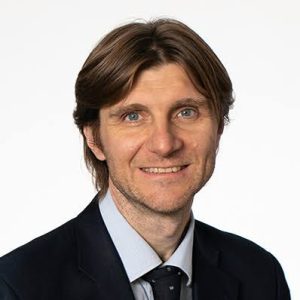
Programme and Course Leader: Hans de Wit Professor Emeritus and former Director, Center for International Higher Education (CIHE), Boston College; Senior Fellow, IAU; founding editor, Journal of Studies in International Education; founding member and past President, EAIE. |
Course: GLOBAL TRENDS AND DIMENSIONS IN HIGHER EDUCATION This course explores the context of internationalisation of higher education within the broader scope of the development, main manifestations, and key trends in higher education globally. The course will address and analyse the historical evolution of higher education in different parts of the world, its massification and its role in the global knowledge society and economy, and the role of public and private higher education. Issues such as access and equity, governance, funding, and the three missions of higher education: education, research, and service will be discussed. There will be attention to the different regional contexts, and the divide between high-income , middle- income, and low-income countries with respect to higher education will be addressed. Students will be assessed on how these developments in higher education impact and are impacted by developments in internationalisation of higher education, as discussed in course 2-9. Course: GLOBAL MOBILITY OF STUDENTS, STAFF AND PROGRAMMES This course explores the role of education abroad, all forms of mobility, in internationalisation of higher education. Mobility is perceived as a key manifestation of internationalisation, particularly degree mobility by students. But there are many forms of mobility by students, as well as by academic and administrative staff, and by programmes and institutions (also referred to as Transnational Education or Cross-Border Education). An overview and analysis of these different forms, key trends, and issues in each of them will be provided and discussed. Particular attention will be given to South-North mobility and changing patterns in global mobility trends. Education abroad will be analysed in the context of higher education developments as discussed in course 1, and in relation to internationalisation of the curriculum at home, as discussed in course 8. |
IAU Coordinator: Giorgio Marinoni |
|
|
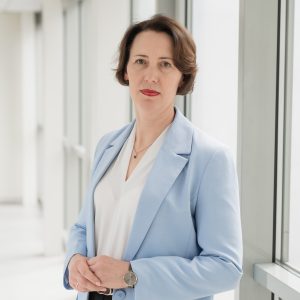
Programme Co-Leader: Jolanta Urbanovič Professor at Mykolas Romeris University; former Vice-Dean; former Vice-Minister of Education, Science and Sport and former Adviser to the President of Lithuania on education, science and higher education policy. |
|
|
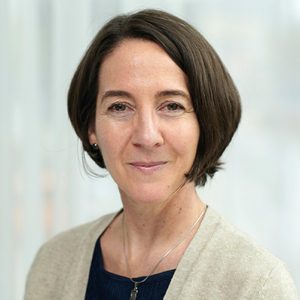
Course Leader: Elspeth Jones Emerita Professor of Internationalization of Higher Education, Leeds Beckett University; founding editor of Routledge’s Internationalization in Higher Education series. |
Course: INTERNATIONALISATION OF HIGHER EDUCATION: MEANINGS, RATIONALES, STRATEGIES AND TRENDS This course explores several foundational concepts that are developed further throughout the programme. It begins by examining what is meant by the internationalisation of higher education, offering a comprehensive overview of the concept while challenging common myths and misconceptions. Participants will consider how the rationale for internationalisation is shaped by global, regional, national, local, and institutional contexts, and why a clear, mission-aligned rationale is essential for developing an effective internationalisation strategy. It further examines the key components of such a strategy, including the policies, enabling conditions, and practical approaches required for successful implementation. Drawing on examples and trends from different regions of the world, participants will explore responses to diverse contexts and consider the implications for policy and practice. These themes provide a foundation for understanding the strategic and operational dimensions of internationalisation in higher education, offering guidance on developing a roadmap for implementation. |
|
Course Leader: Tessa DeLaquil Associate Professor, Norwegian University of Science and Technology; co-editor of Springer’s Debating Higher Education: Philosophical Perspectives; Associate Editor, Policy Reviews in Higher Education. |
Course: INNOVATION, CHANGE AND PARTNERSHIPS IN HIGHER EDUCATION RESEARCH The way that academic research is conducted has changed significantly over the past decades, becoming a central policy concern at national and regional levels, as well as a key determinant in university-societal engagement and in terms of how societal impact is understood. This course examines research as a key function of the higher education sector, considering the academic research function across disciplines; research funding; researcher mobility; partnerships with industry, government, and other societal institutions; innovation and discovery; doctoral education; and international research collaboration, including the role of geopolitical forces and military interests in contemporary higher education. In addition, the function of generative artificial intelligence will be discussed as a current concern in the research sphere, in terms of research activity and scholarly publishing. |
|
Course Leader: Laura Rumbley Director for Knowledge Development and Research, EAIE; former Associate Director, Center for International Higher Education (CIHE), Boston College; former Deputy Director, Academic Cooperation Association (ACA). |
Course: EXTERNAL ACTORS IN INTERNATIONALISATION OF HIGHER EDUCATION This course takes as its fundamental point of departure the idea that, while higher education institutions are typically recognised as core actors with respect to internationalisation, the broad ecosystem of internationalisation stakeholders also includes a wide array of external actors. These external actors – including associations, networks, think tanks, non-governmental and governmental agencies, media outlets, commercial service providers, and more – play a range of different roles across the internationalisation landscape and can exert considerable influence over policy, practice, theoretical perspectives and public opinion. Students will be guided through a mapping exercise that will help shape deeper understanding of the various types of external actors, alongside their distinct profiles, motivations and impacts on the sector; into both their historical and contemporary context, and taking into account how external actors play distinct roles in different national and regional contexts. Students should develop a robust and nuanced understanding of these stakeholders and their varied roles and influences. |
|
Course Leader: Marius Laurinaitis Professor, Mykolas Romeris University; Director of the Bachelor’s programme in Law, Financial Innovation and Artificial Intelligence; consultant to the United Nations Office on Drugs and Crime (UNODC). |
Course: TECHNOLOGY, DIGITALISATION AND AI IN HIGHER EDUCATION This course explores how digital transformation and AI are reshaping teaching, learning, and institutional governance in higher education. It examines the opportunities and challenges of AI driven technologies in areas such as curriculum design, assessment, student support, and academic administration, while providing a broader understanding of how digitalization is transforming educational practices and institutions. The course focuses on the practical, ethical, and regulatory dimensions of AI adoption, including generative AI in teaching and assessment, learning analytics, algorithmic decision-making, academic integrity, data protection, transparency, fairness, and digital inclusion. It also considers the benefits and risks associated with emerging technologies and discusses approaches to their responsible and effective implementation. The course also addresses the organizational changes required for sustainable digital transformation, including institutional policies, staff competencies, and technological infrastructure. Assessment is based on the development of a practical proposal for integrating digital technologies or AI into a course, study program, or institutional process, ensuring that the initiative is pedagogically sound, ethically responsible, and aligned with institutional objectives. |
|
Course Leader: Ligia Deca Secretary-General, Romania’s National Commission to UNESCO; Vice-Rector, National University of Political Studies and Public Administration; former Minister of Education and former Head of the Bologna Secretariat. |
Course: REGIONAL DEVELOPMENT IN HIGHER EDUCATION: EUROPEAN AND COMPARATIVE PERSPECTIVE This course develops the ability to critically analyse international higher education policies in Europe and to assess their relevance for wider internationalisation debates. Using the European experience as a comparative lens, participants examine how supranational frameworks—the European Higher Education Area (EHEA) and European Education Area (EEA)—have shaped policy convergence, quality assurance, mobility and recognition, and how the European University Alliances model deep institutional cooperation and transnational governance. These mechanisms are situated within global concerns: the geopolitics of knowledge, competition and cooperation between world regions, equitable partnerships, brain circulation, and the role of regional blocs in a contested global landscape. Through comparative case studies, participants critically appraise the transferability of European integration mechanisms to other contexts, weighing tensions between regional cohesion, institutional diversity, and national sovereignty. |
|
Course Leader: Luciane Stallivieri Professor and researcher, Federal University of Santa Catarina; coordinator of research on internationalization of education; consultant to the Brazilian Ministry of Education, OEA (Organization of American States) and UNESCO. |
Course: INTERNATIONALISATION OF THE CURRICULUM AT HOME: INCLUSIVE PEDAGOGY AND DIGITAL INNOVATION This course explores the concept of Internationalisation at Home (IaH) and the Internationalisation of the Curriculum (IoC) as essential pillars for providing global perspectives to the non-mobile majority of students. While mobility remains a key manifestation of internationalisation, this course shifts the focus toward purposeful integration of international and intercultural dimensions into the formal and informal curriculum for all students within their domestic learning environments. Participants will analyse the foundational concepts of IoC, challenging the common misconception that internationalisation is synonymous with physical mobility. The course will delve into innovative pedagogical approaches, with a specific focus on the role of digitalisation in creating “virtual exchange” opportunities. Drawing on the global trends of access and equity discussed in earlier modules, participants will explore how to decolonise the curriculum and leverage local cultural diversity to foster global citizenship. Furthermore, the course addresses the strategic implementation of IoC, examining the enabling conditions and policies required to move from theory to practice. Participants will be assessed on their ability to redesign a specific module or program, ensuring that internationalized learning outcomes are clearly defined, assessed, and aligned with the institutional mission. |
|
Course Leader: Rita Locatelli Researcher, Università Cattolica del Sacro Cuore; Academic Board member, Centre for Higher Education Internationalization (CHEI); Scientific Committee member of the UNESCO Chair in Education for Human Development and Solidarity among Peoples. |
Course: INTERNATIONALISATION FOR SUSTAINABLE DEVELOPMENT AND SOCIETY This course examines how higher education internationalisation can contribute to sustainable development by strengthening the educational mission and societal responsibilities of universities in an increasingly interconnected yet fragmented world. It critically discusses different understandings of the relationship between higher education and development, exploring how internationalisation can move beyond instrumental and market-oriented approaches to support more inclusive, responsible, and context-sensitive forms of international cooperation. The course addresses contemporary debates on higher education internationalisation, examining how universities can respond to global challenges, growing inequalities, and geopolitical transformations while remaining committed to international cooperation, social responsibility, and the public purposes of higher education. It highlights how internationalisation strategies can strengthen institutional missions and enhance higher education’s contribution to more sustainable, equitable, and peaceful societies. |
|
Course Leader: Inga Juknytė-Petreikienė Associate Professor, Head of the Centre of Academic Affairs, Mykolas Romeris University; extensive experience (more than 25 years) in international higher education projects, joint degree programmes, programme evaluation and quality assurance across Europe and beyond. |
Course: FINAL PROJECT |





Programme start. The MPA programme will begin in February 2027.
Study format. The programme combines in-person and online learning:
- First intensive week in Vilnius: The programme will begin with an intensive week held in person at Mykolas Romeris University in Vilnius, Lithuania. This will include the programme’s opening event and the first two courses.
- Online learning: All subsequent courses will be taught online.
- Final thesis defence in Vilnius: Students will return to Mykolas Romeris University for their final thesis defence, which will take place in person.
Course structure. The programme follows a modular structure. Courses are taught sequentially, with students completing one course before starting the next.
Class schedule. Online classes are expected to take place on two weekday evenings per week and during the day on Saturdays. All class times will follow local time in Lithuania.
Required documents:
- Bachelor degree or equivalent first university degree diploma with a minimum study duration of 3 years is required (for graduates from Indian or Bangladeshi education systems, a degree with a minimum study duration of 4 years is required.)
- Academic transcripts of each study year
- Document proving English language level
- Proof of at least 3-years work experience in a higher-education position
- Letter of motivation
- Passport copy
- Curriculum Vitae (CV)
Provided documents must be in color, have no cut corners (high quality scan).
- Choose a study programme
- Fill in the application form at apply.mruni.eu
- Pay the non-refundable application fee (for non-EU citizens – 100 euros, for EU-citizens, MRU alumni, and Ukrainians – 50 euros)
- Receive your application evaluation results
- Confirm your acceptance by paying the first-year tuition fee and 50 euros registration fee (non-refundable)
- Sign the study contract
- Start Temporary Residence Permit application procedure
- Register to studies
Required level – B2
Assessments of English language proficiency certificates equivalent to level B2:
- DUOLINGO 100-125 (recommended)
- TOEFL IBT 72-94 (4-4,5)
- IELTS 5.5-6.5
- PTE score 59-75
- IGCSE English First Language – E/3 or above
- Cambridge International English GCE O Level/GCSE – English Language grade E / 3 or above
- Cambridge English: B2 First, C1 Advanced – Overall Cambridge English Scale score of 162 or above
If you do not have a certificate proving your English language proficiency level, you can take the University Online English language level test. You will be able to choose this option while filling in the application. The test is free of charge.
Certificate is not required if your native language is English or if your previous studies were conducted fully in English language.
- If the original educational documents/transcripts are in English, Lithuanian or Russian with an apostille (if required) on the scanned original, no translation needed.
- If original educational documents/transcripts are not in English, Lithuanian or Russian languages, then they have to be supplemented with an official translation.
- The official translation has to be confirmed with the sworn translator’s signature or official notarization.
- Accepted students shall present their original educational documents/transcripts to the International Office upon arrival to begin their studies.
Country Specific Requirements can be found here.
Recognition of Foreign Qualifications
- The evaluation and recognition of prior qualifications is a part of Mykolas Romeris University (MRU) admissions process.
- By submitting the online application you confirm that the documents are legitimate and that MRU can verify the authenticity of the documents by contacting its issuing authority and national ENIC/NARIC centre.
- Documents uploaded must be in good condition and in full colour. Documents issued in languages other than English, Russian, or Lithuanian must be accompanied with an official translation into English or Lithuanian.
- Before you apply make sure that you have a complete documentation package and that your qualifications are giving access to higher education according to the study programme level you are applying for at the MRU.
Recognition Criteria
- The purpose of an assessment is to compare a foreign qualification with a similar level qualification awarded in Lithuania according to quality, profile, content, workloads and learning outcomes.
- Your qualification will be assessed according to specific requirements for the programme you are applying for and whether your academic results are sufficient for studies at the MRU.
Right to Appeal
Recognition decisions can be appealed against to the Academic Recognition of Foreign Qualifications Concerning Higher Education Appeal Committee under the Lithuanian Ministry of Education and Science.
All appeals with supporting documents must be submitted to:
Centre for Quality Assessment in Higher Education
Ph.: +37052104778
Email: recognition@skvc.lt
Address: SKVC, A. Goštauto st. 12, LT-01108, Vilnius, Lithuania
The procedure of evaluation and recognition of academic qualifications
Master Degree:
Application fee (non-refundable):
- for Non-EU citizens – €100
- for EU citizens, MRU Alumni, and Ukrainians – €50
Registration fee (non-refundable):
- €50
Tuition fee (EU/Non-EU citizens) per 1 academic year: €5500 per one academic year (2026-2027).
Payment information will be provided in the invoices issued in your online application form.
Student continues to pay the same tuition fee which was implied at the time of the admission.
IAU Certificate:
Application fee (non-refundable):
- for Non-EU citizens – €100
- for EU citizens, MRU Alumni, and Ukrainians – €50
Registration fee (non-refundable):
- €50
Tuition fee:
- €3200 for IAU Members
- €3500 for Non IAU Members
Payment information will be provided in the invoices issued in your online application form.
Individual Course:
Tuition fee:
- €700 for 4 ECTS courses
- €800 for 6 ECTS courses
List of scholarships can be found here.
The IAU Certificate programme consists of five courses from the full Master’s programme and is delivered entirely online. It runs over one academic year, following the same schedule as the full Master’s programme, with certificate participants attending classes alongside Master’s students. Participants enrol as non-degree learners, without student status.
The five courses of the IAU Certificate are:
- Global Trends and Dimensions in Higher Education (6 ECTS): Professor Hans de Wit
- Internationalization of HE: Meanings, Rationales, Strategies and Trends (6 ECTS): Professor Elspeth Jones
- Global Mobility of Students, Staff and Programmes (4 ECTS): Professor Hans de Wit
- Internationalisation of the Curriculum at Home: Inclusive Pedagogy and Digital Innovation (4 ECTS) Professor Luciane Stallivieri
- Internationalisation for Sustainable Development and Society (4 ECTS) Professor Rita Locatelli
Fees for the certificate:
- Employees from an IAU member institution: 3200 Euros
- Employees from a non-member institution: 3500 Euros
Admission requirements for IAU certificate:
- Bachelor degree or equivalent first university diploma with a minimum study duration of 3 years is required
- For graduates from Indian or Bangladeshi education systems, a degree with a minimum study duration of 4 years is required
- Document proving English language level
- Letter of motivation
- Curriculum Vitae (CV)
Admission steps:
- Fill in the application form
- Please note: Applications close on 15 December 2026
- Pay the non-refundable application fee (for non-EU citizens – 100 euros, for EU-citizens, MRU alumni, and Ukrainians – 50 euros)
- Receive your application evaluation results
- Confirm your acceptance by paying the tuition fee and 50 euros registration fee (non-refundable)
- Sign the study contract
- Complete administrative registration
In addition to enrolling in the full MPA programme, professionals can choose to take individual courses for focused professional development.
Participants can choose from 5 courses that form part of the IAU Certificate programme, each worth 4–6 ECTS credits and delivered fully online.
This flexible option allows professionals to develop specific skills and knowledge without committing to the full master’s programme. Participants enrol as non-degree learners, without formal student status, and earn ECTS credits that may be transferred towards the full MPA degree at a later stage.
Tuition fees per course:
- 4 ECTS course – €700 per participant
- 6 ECTS course – €800 per participant
Admission requirements:
- Bachelor degree or equivalent first university diploma with a minimum study duration of 3 years is required
- For graduates from Indian or Bangladeshi education systems, a degree with a minimum study duration of 4 years is required.
- Document proving English language level
- Letter of motivation
- Curriculum Vitae (CV)
Admission:
Please contact our Student Admission Centre directly by email to get admission guidelines: study@mruni.eu
Registration for individual courses is open from 15 October to 17 December 2026, following the same admission period as the full MPA programme.
Studies begin in February 2027. Participants enrolled in individual courses will study alongside students in the full MPA programme, following the official programme timetable.
E-mail: study@mruni.eu
Phone: +370 5 271 4700
WhatsApp: +370 6 564 6682
Office: I-122

Professor Emeritus and former Director, Center for International Higher Education (CIHE), Boston College; Senior Fellow, IAU; founding editor, Journal of Studies in International Education; founding member and past President, EAIE.
COURSE: GLOBAL TRENDS AND DIMENSIONS IN HIGHER EDUCATION
„Higher education is shaped by global trends and developments that influence institutions, students, and societies around the world. This course provides students with the opportunity to explore these trends, understand their impact on higher education and its internationalisation, and critically examine the changing global landscape in which universities operate.“
Discover insights from the Programme Leader, Professor Hans de Wit (FACEBOOK VIDEO LINK).

Emerita Professor of Internationalization of Higher Education, Leeds Beckett University; founding editor of Routledge’s Internationalization in Higher Education series
COURSE: INTERNATIONALISATION OF HIGHER EDUCATION: MEANINGS, RATIONALES, STRATEGIES AND TRENDS
„This flexible programme allows professionals to develop their strategic and practical approaches to the internationalisation of higher education at Masters level, working with globally-minded participants and facilitated by world renowned experts.“

Associate Professor, Norwegian University of Science and Technology; co-editor of Springer’s Debating Higher Education: Philosophical Perspectives; Associate Editor, Policy Reviews in Higher Education
COURSE: INNOVATION, CHANGE AND PARTNERSHIPS IN HIGHER EDUCATION RESEARCH
„The MRU-IAU MPA programme provides an essential toolkit for higher education leaders and professionals, developing competency in the fundamental disciplinary knowledge-base of international higher education alongside the capacity for practical and timely engagement with urgent issue areas in European and global higher education.“

Director for Knowledge Development and Research, EAIE; former Associate Director, Center for International Higher Education (CIHE), Boston College; former Deputy Director, Academic Cooperation Association (ACA)
COURSE: EXTERNAL ACTORS IN INTERNATIONALISATION OF HIGHER EDUCATION
„The knowledge base required for successful career development in the field of international education has grown significantly in recent years. This programme offers cutting-edge information and insights to boost both your skill set and your confidence as an international higher education professional in a fast-moving world.“

Professor, Mykolas Romeris University; Director of the Bachelor’s programme in Law, Financial Innovation and Artificial Intelligence; consultant to the United Nations Office on Drugs and Crime (UNODC)
COURSE: TECHNOLOGY, DIGITALISATION AND AI IN HIGHER EDUCATION
„Artificial intelligence and digital technologies are transforming the way we learn, teach, and work. This course gives students the opportunity to explore these changes, develop a critical understanding of AI, and learn how to use emerging technologies creatively, effectively, and responsibly.“

Secretary-General, Romania’s National Commission to UNESCO; Vice-Rector, National University of Political Studies and Public Administration; former Minister of Education and former Head of the Bologna Secretariat
COURSE: REGIONAL DEVELOPMENT IN HIGHER EDUCATION: EUROPEAN AND COMPARATIVE PERSPECTIVE
„I recommend this programme because I see how it empowers higher education leaders to transform crises into opportunities through strategic internationalisation and applied institutional change.“
Professor Emeritus and former Director, Center for International Higher Education (CIHE), Boston College; Senior Fellow, IAU; founding editor, Journal of Studies in International Education; founding member and past President, EAIE
COURSE: GLOBAL MOBILITY OF STUDENTS, STAFF AND PROGRAMMES
„Student and staff mobility is an important part of the international higher education experience, connecting people, institutions, and cultures across borders. This course examines different types of mobility of students, staff and programs, current approaches to global mobility and Transnational Education, and the opportunities and challenges involved in developing mobility for students, staff, and academic programmes.“
Discover insights from the Programme Leader, Professor Hans de Wit (FACEBOOK VIDEO LINK).

Professor and researcher, Federal University of Santa Catarina; coordinator of research on internationalization of education; consultant to the Brazilian Ministry of Education, OEA (Organization of American States) and UNESCO
COURSE: INTERNATIONALISATION OF THE CURRICULUM AT HOME: INCLUSIVE PEDAGOGY AND DIGITAL INNOVATION
„I recommend the Global Engagement and Internationalisation MPA because it pairs IAU-backed global expertise with a flexible blended format and practice-driven applied research to equip higher-education leaders with the strategic, digital, and sustainable tools to deliver real institutional impact.“

Researcher, Università Cattolica del Sacro Cuore; Academic Board member, Centre for Higher Education Internationalization (CHEI); Scientific Committee member of the UNESCO Chair in Education for Human Development and Solidarity among Peoples
COURSE: INTERNATIONALISATION FOR SUSTAINABLE DEVELOPMENT AND SOCIETY
„This programme asks practitioners to look beyond the ‘how’ of internationalisation to its ‘why’, the kind of reflection that values-based decision-making genuinely requires, while bringing together professionals from very different higher education systems, so that each institutional reality becomes a source of knowledge for the others.“

Associate Professor, Head of the Centre of Academic Affairs, Mykolas Romeris University; extensive experience (more than 25 years) in international higher education projects, joint degree programmes, programme evaluation and quality assurance across Europe and beyond.
COURSE: FINAL PROJECT
„I highly recommend this Master’s programme to students who want to share and discus how globalisation and internationalisation are shaping the future of higher education and who aspire to become leaders in this field. It offers an international learning environment, practical insights from experienced academics and practitioners, and the opportunity to develop the knowledge and strategic skills needed to make a meaningful impact in higher education.“

Professor at Mykolas Romeris University; former Vice-Dean; former Vice-Minister of Education, Science and Sport and former Adviser to the President of Lithuania on education, science and higher education policy.
PROGRAMME CO-LEADER
„I recommend this programme because higher education today operates not only in an academic environment, but also in an increasingly complex geopolitical space. Through academic diplomacy, international partnerships and the global mobility of talent, universities build trust, sustain dialogue and contribute to societal resilience, while at the same time facing growing challenges related to geopolitical fragmentation, security and academic freedom. For higher education professionals, it is therefore no longer enough to simply manage internationalisation activities; they need to understand international political dynamics, assess risks and use universities’ soft power responsibly. The value of this programme lies in bringing together professionals from different countries to explore how universities can remain globally open while strengthening resilience and responsible international cooperation.“

Secretary General of the International Association of Universities (IAU)
Discover insights from Dr. Hilligje van’t Land (ARTICLE LINK), Secretary General of the International Association of Universities (IAU).

Rector of Mykolas Romeris University
Prof. Dr. Inga Žalėnienė invites higher education leaders to discover the international Master of Public Administration programme Global Engagement and Internationalisation of Higher Education, offered in partnership with the International Association of Universities (IAU) (YOUTUBE VIDEO LINK).