Can cities be saved from climate change not by technology, but by… nature? This question is gaining increasing attention in the scientific community. Imagine a city where summers are cooler, streets do not flood after heavy rain, and green spaces are not just decorative—but places for real rest and recovery.
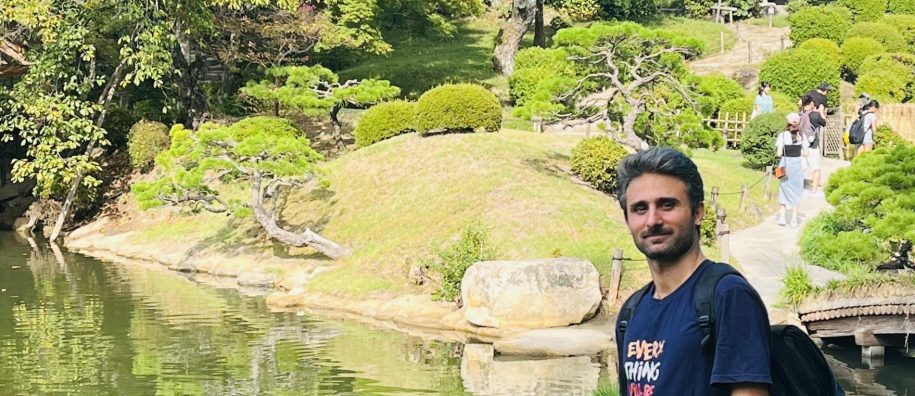
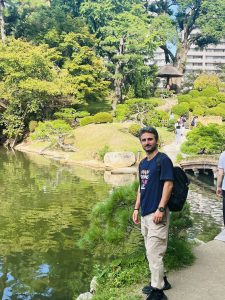
These are the kinds of solutions explored by Kamaleddin Aghaloo, a postdoctoral researcher at the Environmental Management Laboratory of Mykolas Romeris University (MRU). His work brings together experiences from cities around the world and looks for ways, nature can become a key part of urban infrastructure.
Learning from the Past to Shape Future Cities
“I have always thought about how we can live better—as a community and as part of nature,” he says. This perspective was shaped not only by academic studies, but also by observing how different societies deal with limited resources.
“Water is the source of life. History shows us how communities living in harsh conditions were able not only to survive, but to build sustainable systems—for example, through qanats,” the researcher explains.
Dr. K. Aghaloo’s academic journey spans several regions—from China to Japan—and now continues in Lithuania. This global experience helps him see cities in a broader context. While cities differ in size and structure, they face similar climate challenges. In some Chinese cities, for example, populations exceed 20 million. These urban environments require complex infrastructure, advanced green solutions, and long-term planning.
When Nature Becomes Urban Infrastructure
One of dr. K. Aghaloo’s main research areas is nature-based solutions. According to the European Commission, these are actions inspired and supported by nature that address societal challenges while protecting and restoring ecosystems. However, there is no universal solution.
“As researchers, we connect people’s needs with the places they live. This requires urban design, spatial planning, and governance to work together across disciplines,” he explains.
Instead of focusing on a single solution, scientist emphasizes a broader approach. Well-designed green infrastructure can deliver multiple benefits at once. For example, green spaces can reduce heat and absorb rainwater, green roofs can lower building temperatures and energy use, urban forests improve air quality, lakes and wetlands help manage flooding. The key is not only what solution is used, but where it is implemented.
Data-Driven Cities and Better Decisions
Dr. K. Aghaloo studies these processes using geospatial decision-support systems. Cities generate vast amounts of data—from population density to climate risks. By analyzing this data, researchers can identify problem areas, model future scenarios, and support better decision-making.
“For policymakers, this means they can visualize different scenarios and understand the impact of their decisions before implementation,” he says. “For example, they can identify flood-prone areas or locations where green infrastructure would be most effective.”
His research has already gained international recognition. His publications are among the most cited, and his methods help planners and policymakers design more sustainable cities. Still, one common misconception remains.
“Climate resilience is often associated only with large infrastructure or technology. But it also includes social systems and urban planning. Even small, well-targeted interventions can have a significant impact,” he notes.
Rethinking the City of the Future
Joining MRU was a natural step for dr. K. Aghaloo. The laboratory’s focus on interdisciplinary research and real-world impact aligns closely with his work. Head of the Environmental Management Laboratory, Prof. Paulo Pereira, highlights his contribution:
“Kamal has integrated well into the team and strengthens our research on urban areas, that is especially important, as most people live in urban environments.”
Today, Kamal continues to explore how nature, technology, and social needs can work together—and how science can become part of everyday urban life. The city of the future will not necessarily be full of technology. It may be full of nature.
Text prepared by Laura Stankūnė, MRU science communicator
Photos: personal archive of scientist