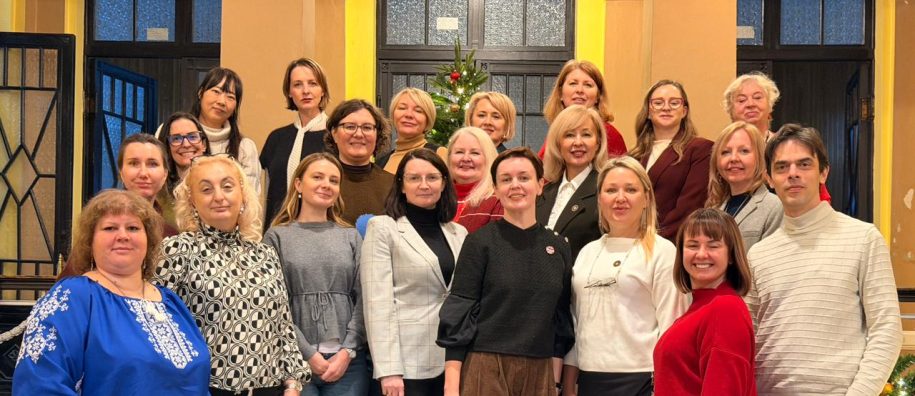
On 12-16 January, the kick-off meeting of the “SAFE LEARN” project (ERASMUS-EDU-2025-CBHE) took place at the Public Security Academy of Mykolas Romeris University (MRU). The event brought together representatives of universities from Ukraine and European Union (EU) countries and served as an important platform for sharing experiences, discussing current challenges, and shaping a shared vision for the project’s implementation and future outcomes.
During the event, project partners delivered presentations, including representatives of Ukrainian higher education institutions, who shared their experiences of working with students and academic staff under wartime conditions. Project partners from Poland, Sweden, and Germany also presented their expert insights and opportunities to contribute to the further development of the SAFE LEARN project.
Particular attention during the meeting was given to discussions on the project’s objectives and activities, the development of the SAFE LEARN online platform, planning for the sustainability of results, the distribution of responsibilities among partners, as well as strengthening professional networking and intercultural dialogue.
On 13 January, project participants were introduced to the significance of Day of the Defenders of Lithuania. This day holds special importance in Lithuania’s history, symbolising the peaceful struggle of citizens for freedom and independence. In 1991, the Soviet army, seeking to suppress Lithuania’s restoration of independence, carried out military aggression against civilians and key strategic sites. Despite the losses—14 people were killed and more than 600 were injured in Vilnius that night – Lithuanian society defended its restored state independence.
About the Project
The SAFE LEARN project is dedicated to the urgent need for trauma-sensitive and adaptive education in Ukrainian higher education institutions affected by war, forced displacement and protracted crises. The initiative focuses on strengthening the capacity of university lecturers to implement innovative, student-centered and trauma-informed teaching methods that support the psychological well-being, academic performance and social integration of students experiencing war-related challenges.
By implementing a structured capacity-building programme, digital learning resources and integrating institutional policies, the project will provide educators with the tools needed to foster safe, inclusive and supportive learning environments. The project is in line with the National Strategy for Inclusive Education of Ukraine for 2024–2029. and includes the best practices of EU institutions in the field of trauma-informed pedagogical work.