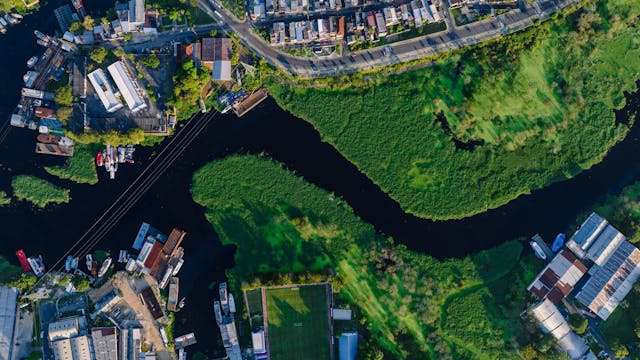
Modern cities are expanding, and with this growth comes a growing need for easily accessible, safe, and inclusive green spaces. Research shows that parks and public green areas improve both physical and emotional health, strengthen community bonds, and contribute to climate-resilient urban environments. However, for these spaces to truly serve everyone, it is not enough simply to have them – they must be realistically, quickly, and conveniently reachable.
To address this issue, the Environmental Management Research Laboratory of Mykolas Romeris University (MRU), led by Prof. Dr. Paulo Pereira and his team, has developed a new, comprehensive method to accurately evaluate the accessibility of urban green spaces.
The Cities We Live In, and the Green Spaces We Need
Cities around the world continue to grow, and with that growth come increasing challenges related to residents’ well-being and urban planning. The United Nations Sustainable Development Goal (SDG) No. 11 emphasizes that cities must be sustainable and people-friendly, which requires ensuring universal access to safe and inclusive green spaces (SDG 11.7) and accessible, sustainable transport systems for all (SDG 11.2). These two targets are closely interconnected: green spaces must not only exist in the city but also be realistically accessible by various means – on foot, by bicycle, or other modes of transport. This vision forms the foundation for a new approach to urban sustainability and social justice.
What Did the Research Team Study?
Researchers at the MRU Environmental Management Research Laboratory analyzed how residents of different urban districts can reach recreational green spaces within 5 and 10 minutes using four modes of transport: walking, cycling, public transport, and car. The study employed network analysis – a method that reconstructs real urban street, pathway, and public transport systems while accounting for actual barriers such as one-way streets, stairways, sidewalk conditions, or the distribution of bus stops.
The collected and refined data – from park boundaries and entry points to bus routes and population density – enabled the creation of a methodology applicable to different cities, making it easy to compare their accessibility situations.
Why Sustainable Development Is Important for Society?
The study revealed that real accessibility to green spaces is often significantly lower than what simple distance calculations suggest. Particularly striking issues emerged when evaluating public transport accessibility – in some cities, it ranked much worse than access by bicycle or car. This raises important questions about social equity: not everyone has equal opportunities to reach urban nature.
The new methodology is highly valuable for urban planners, municipalities, and local communities. It makes it possible to clearly identify where infrastructure improvements are needed, which parts of the city should be supplemented with green infrastructure, and where public transport routes should be improved.
What Does This Mean for Us?
Green spaces are not merely aesthetic elements – they are an essential part of a healthy and vibrant city. If they are not easily accessible, residents cannot fully benefit from their many advantages. The MRU study contributes to a new, data-driven culture of urban planning that aims to ensure cities are comfortable, sustainable, and inclusive for everyone, regardless of where they live or what mobility options they have.
Read full paper here.