
Academia often treats the number of publications as a measure of success. However, scientists themselves often talk about something else: connections, interdisciplinary ideas and processes that are almost invisible from the outside. Some researchers see productivity as invitations to publish in top journals. Others define it as the ability to run projects while contributing to global challenges. For some, it simply means building connections and growing continuously.
Foundation for the Promotion of Scientific Activities, established in 2020 at Mykolas Romeris University (MRU), annually awards the most active researchers (link to the fund regulations on the MRU intranet). Those who strengthen the quality, internationality and impact of science on society. In 2025, the Foundation awarded three scientists: Professor Dr. Mindaugas Briedis, young researcher Dr. Miguel Angelo Raposo Inacio and doctoral student Rasa Rudaitienė. Their experiences reveal that productivity in science does not have a single definition.
When productivity becomes demand
The career of dr. Mindaugas Briedis, a professor of philosophy at the Faculty of Human and Social Studies at MRU, reflects a stage when the social networking in science that required a lot of effort now brings results. International relations, conferences, joint projects - activities that many still consider ‘additional’ - have become essential in his case. The scientist admits that today, instead of trying to publish his research, he increasingly receives invitations: "This year is the first when I am fully booked for four or five articles in Q1, Q2 journals". This is the moment when productivity in science turns into demand.
However, behind this result lies another, less often visible side. Publications take months to develop. They go through several rounds of revisions and constant dialogue with reviewers and colleagues. This work requires the most time, energy and patience. Yet official reports rarely reflect it. The professor also speaks openly about the paradoxes of the academic system: administrative burden, excessive reports or initiatives that sometimes become more formal than meaningful. “Every scientist is allergic to filling out tables and reports,” he admits.
Speaking about the impact of science, Prof. Dr. M. Briedis avoids romanticizing science: “Without falling into the romantic idealization that science is on the side of good (after all, it is not always), one can see the technical dissemination of successful research.”
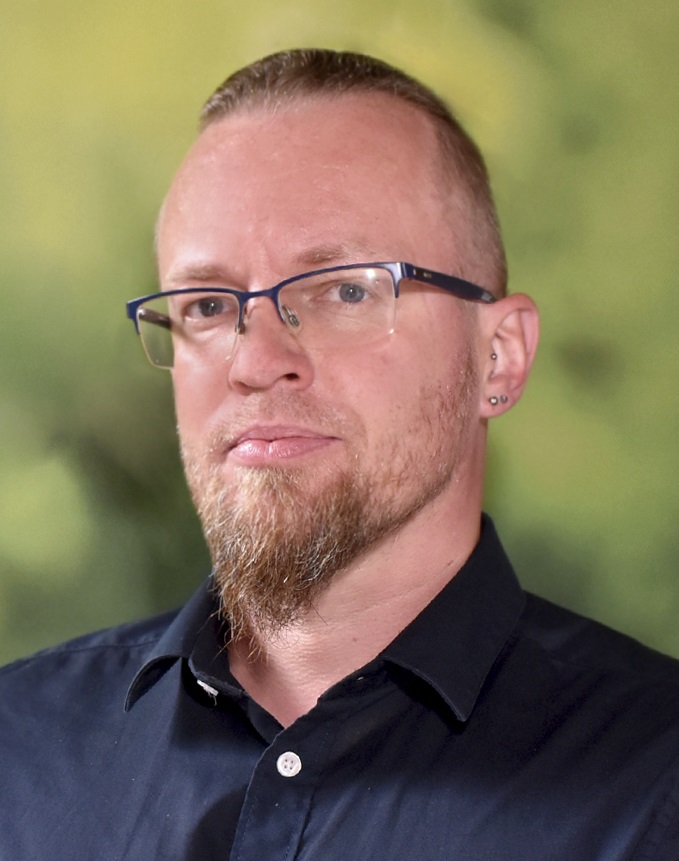
In his opinion, change occurs through the dissemination of ideas to students, sharing with other researchers and through texts that transcend geographical boundaries. The task of the humanities, the professor summarizes, is to create a dialogue between disciplines, rather than closing in on their own field.
Productivity between science and world problems
Doctor of Environmental Sciences Miguel Angelo Raposo Inacio measures productivity not only by academic results, but also by their experience in the real world. “productivity is related to the ability to be involved in multiple tasks and still be able to perform them in a timely manner, so that it contributes positively to fulfilling all institutional and career goals,” shares the scientist.
The researcher analyzes terrestrial, freshwater and marine ecosystems. He uses spatial analysis and remote sensing and publishes in high-level international journals. His research focuses on ecosystem services – the benefits nature brings to people. His goal is ambitious: to support decision-makers with science. He also wants society to better understand the importance of environmental conservation.
"The most important are activities that go towards restoring and preserving nature," he emphasizes.
For a researcher a valuable part of the scientific path is working in an international environment and strong mentorship. From the head of the MRU Environmental Management Laboratory, Prof. Dr. Paulo Pereira, he learns not only methods, but also an approach to science: consistency, focus, and the ability to see the broader context.
Like many scientists, Dr. Miguel Angelo Raposo Inacio has no shortage of challenges in his daily life: bureaucracy, project administration, career uncertainty. However, in the long run, this becomes not an obstacle, but a part of professional growth.
Stability, according to him, in science does not appear by itself. It develops over time, with the constant work and the ability to adapt.
The connections that start everything
Rasa Rudaitienė, winner of the Most Active Doctoral Student of 2025 award, shares her experience about the current stage of her career, which she has long admired and which took time to mature. She states that her productivity as a researcher is still taking shape, but already has a clear direction.
Rasa Rudaitienė's research area is the inclusion of people with disabilities in work and careers, a topic that is important to her not only academically but also in the environment.
"I believe that real changes can be achieved through science," she is convinced.
Today, the young researcher is involved in the research process itself, the opportunity to learn new things and see the connections between science and everyday life. Productivity, in her opinion, is not limited to publications. It is cooperation and being in an international academic community.
She actively participates in international associations, conferences and projects. One of them is PSGENEQ*, led by Dr. Isabel Palomo Domínguez. At MRU, she teaches international master’s students. She also contributes to the Social Inclusion and Leadership Research Laboratory, and she co-authored the first inclusive EPUB textbook in Lithuania, edited by Prof. Dr. Agota Giedrė Raišienė.
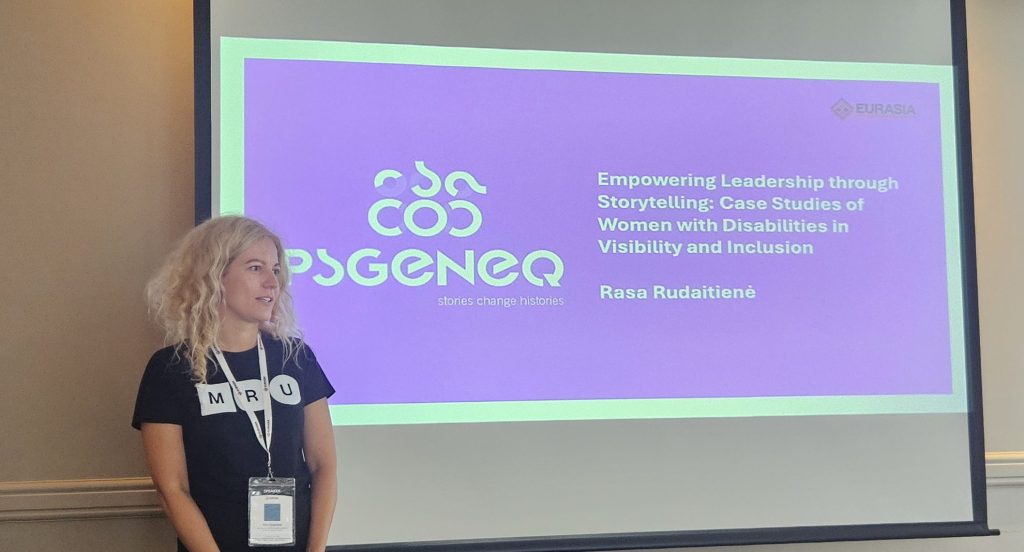
At this stage, stress is inevitable. There are many opportunities, but time is limited. Therefore, she has to constantly make choices, combine different activities, and seek a balance between her scientific career and personal life.
Three paths – one reality
The experiences of these three scientists show that productivity in science goes beyond numbers and indicators. In one case, it grows from connections and curiosity. In another, it builds on a reputation developed over time. A third path links science with real-world challenges
Foundation for the Promotion of Scientific Activities aims to do just that. It creates conditions for these different directions to grow. The fund supports publications, conferences, international projects and exchanges. These activities help science move beyond the university. As the researchers themselves share, the most important thing is not tables or reports, but ideas, people, connections, many of which remain invisible, but it is precisely this that creates change in the long run.
* The project "Establishment of Centres of Excellence at Mykolas Romeris University", funded from the state budget and implemented within the framework of the programme "Initiative of Centres of Excellence" initiated by the Ministry of Education, Science and Sports of the Republic of Lithuania
Text prepared by Laura Stankūnė, MRU science communicator
Photos: personal archive of scientists